

Watch this week’s short video:
Hello everyone!
We’re excited to launch a new video series — one video per week, four per month — exploring the history of video games through its creators, landmark works, and hidden stories. Each episode is a chance to discover a game and the context that shaped it.
Every month, a new theme will be announced in the newsletter, with the possibility of expanding into other original formats such as articles, interviews, and more — all depending on your financial support.
If you haven’t supported us yet, now is the perfect time. Every donation — big or small — keeps the association alive, the preservation work going, and the content flowing.
This week’s episode is about:
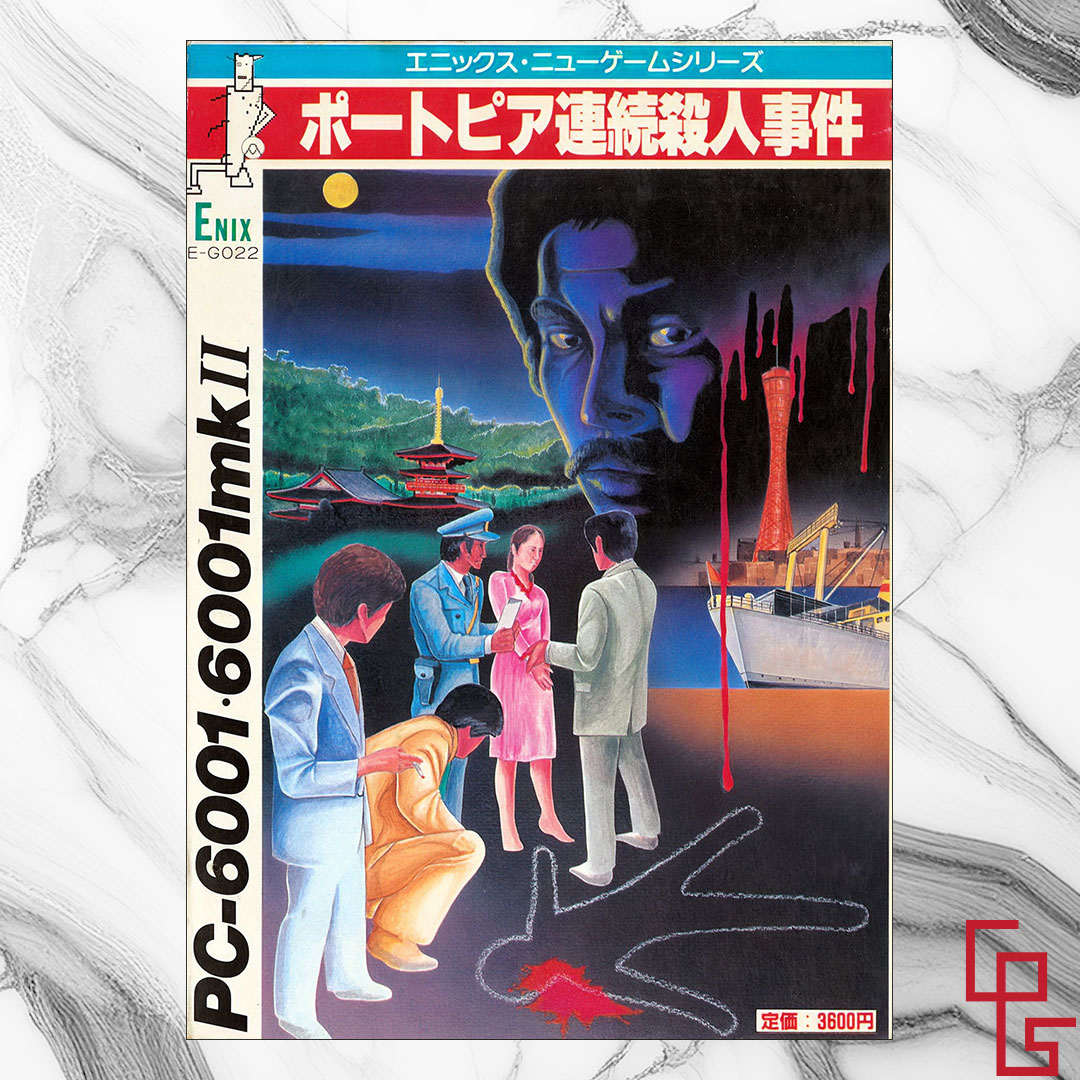
Original package cover (scanned from our archive)
Portopia Renzoku Satsujin Jiken (aka “The Portopia Serial Murder Case” or “Portopia”)
Original Title: ポートピア連続殺人事件【pōtopia reŋzoku satsujiŋ jikeŋ】
Published by ©Enix in 1983
For the NEC PC-6001/mkII on Cassette tape (original version)
Catch phrase: “The definitive suspense adventure!”
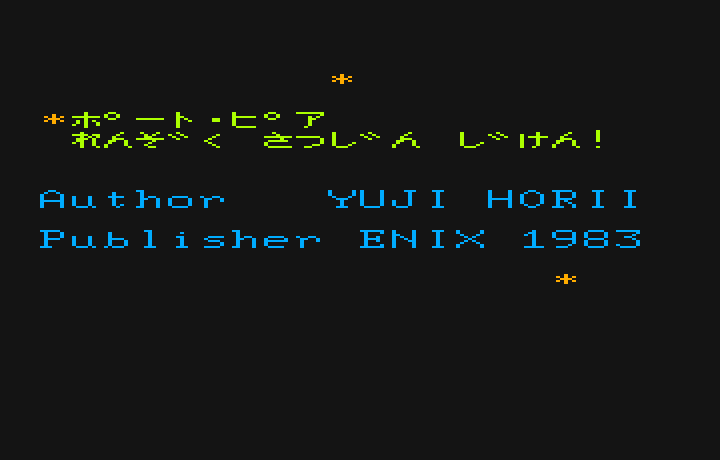
Title screen — Author: Yūji HORII, Publisher: Enix
NB: Video and screenshots are for the PC-6001mkII version (side B of the original cassette tape). Unusually, both the PC-6001 and PC-6001mkII versions were included on opposite sides of the same tape.
When discussing the early days of Japanese adventure games, this is one title that can’t be overlooked.
Portopia is a serious mystery adventure developed essentially single-handedly by Yūji HORII, who would go on to give birth to the Dragon Quest series (known as Dragon Warrior in early Western releases). The player acts as a detective investigating a string of murders in the city of Kobe, alongside his subordinate Yasu.
The game employs a command input system which was popular at the time, in which the player would type commands like “interrogate” “search” and “investigate” for Yasu to perform.
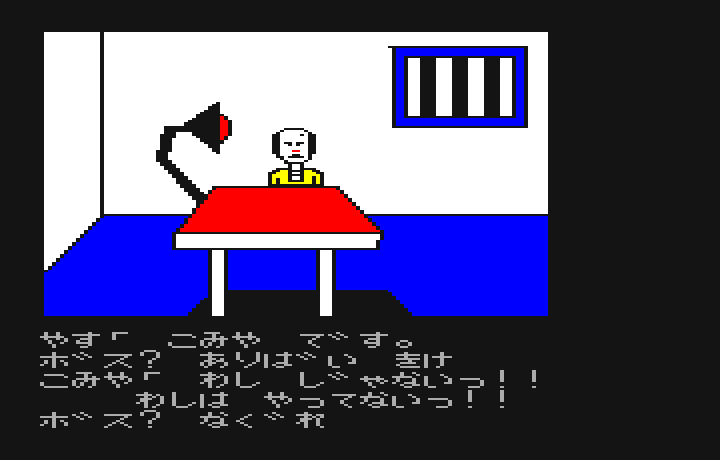
Interrogating a suspect using the command input system
While the graphics were quite plain, the use of real place names and the conversations with Yasu effectively encouraged players to use their imaginations. It combined the experience of reading a dense mystery novel while giving the player agency within the plot, eliciting a feeling of tension and immersion different from modern adventure games that generally emphasize graphics.
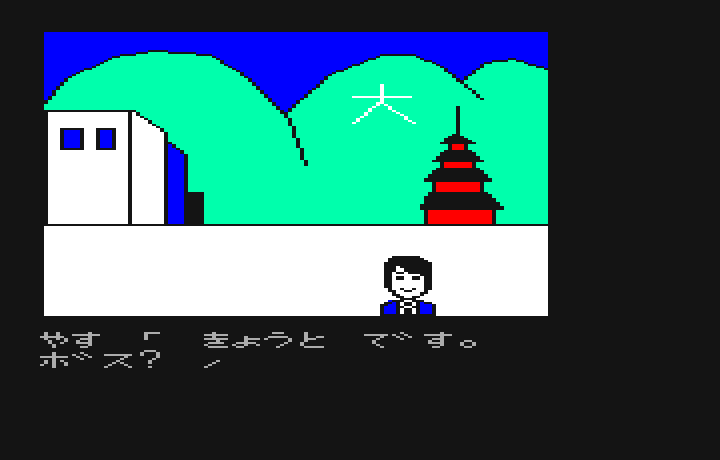
Investigating real locations in Kyōto
It’s also said to be strongly influenced by Sierra On-Line’s Apple II game Mystery House, which had gained popularity in America a few years earlier.
At the same time, it set itself apart by employing an interface appealing to Japanese gamers and combined locales, interpersonal relationships and storytelling in a unique way.
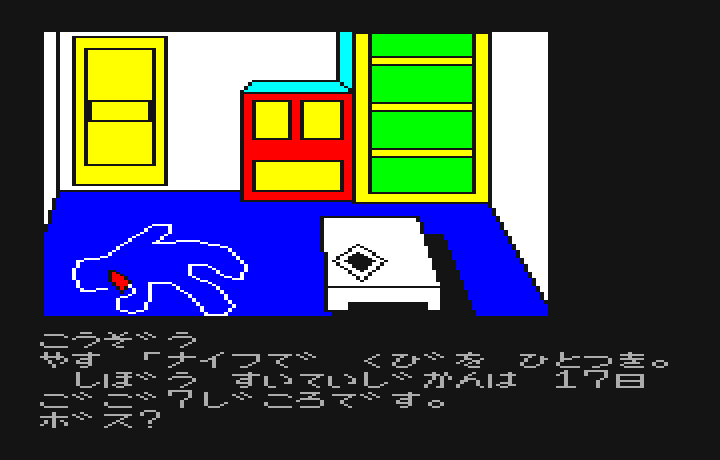
The crime scene — a locked-room murder in Kōbe
Portopia was also compatible with the PC-6001mkII’s text-to-speech technology, which could read aloud parts of the characters’ dialogue on a compatible machine.
Although the voice itself was rather silly, it was an incredible innovation for the time.
What did you think? Content like this — and the preservation work behind it — is made possible by your support.
We also have a Patreon if you prefer.
NPO Game Preservation Society
Credits
Gameplay and Description: Masatoshi TAKAHASHI (GPS)
Emulation Preparation: Takuya FUKUDA (GPS)
Video Editing: Jean MONSET (GPS)
Bitmap Assets: Oskar STROM
Package Scanning: Archive Division (GPS)
Database Information: Keigo MATSUBARA (GPS)
Curation: Joseph REDON (GPS)
Japanese–English Translation: Christopher S. SHIMMIN (PQ)
Special Thanks: John SZCZEPANIAK, Yūji SATŌ (GPS) and all GPS supporting members