
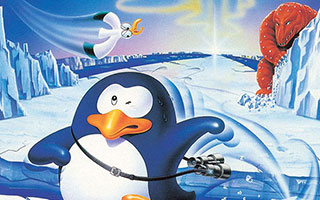
Watch this week’s short video:
Hello everyone!
Welcome back for the second episode of our weekly series. The response to our first video was encouraging, and we appreciate everyone who watched, shared, and left comments. For a small team working to keep game history alive, it really does make a difference.
This week’s episode goes in a completely different direction from the first — and that’s part of what we enjoy about this format. You never quite know where the history of games will lead. We hope you’ll find it as interesting as we did putting it together.
This week’s episode is about:
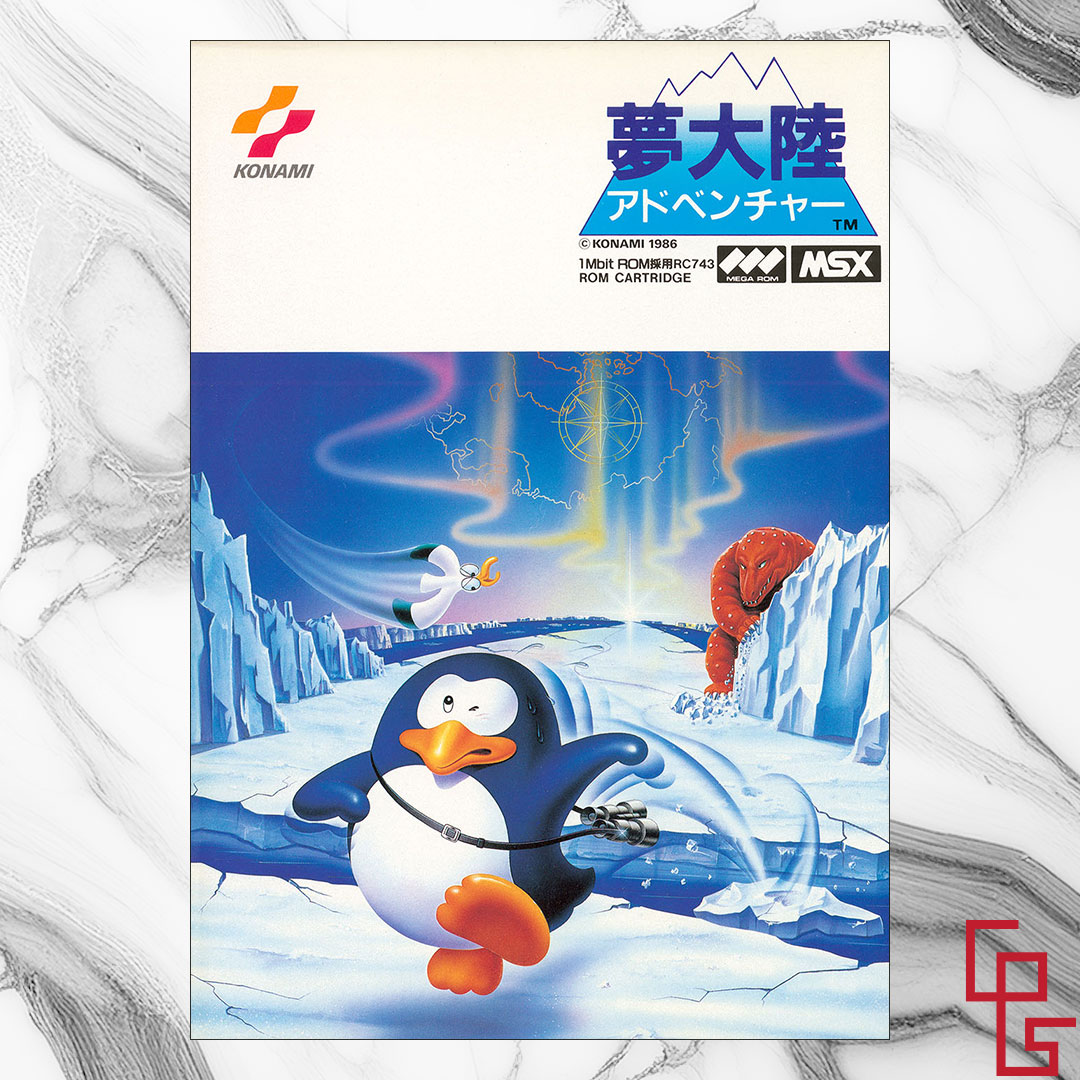
Original package cover (scanned from our archive)
Yume Tairiku Adventure (aka “Penguin Adventure”)
Original Title: 夢大陸アドベンチャー【yume tairiku adobeŋchā】
Published by ©Konami in 1986
For the MSX on ROM Cartridge
Catch phrases: “The definitive shooting + RPG!” “A speedy and powerful romantic adventure”
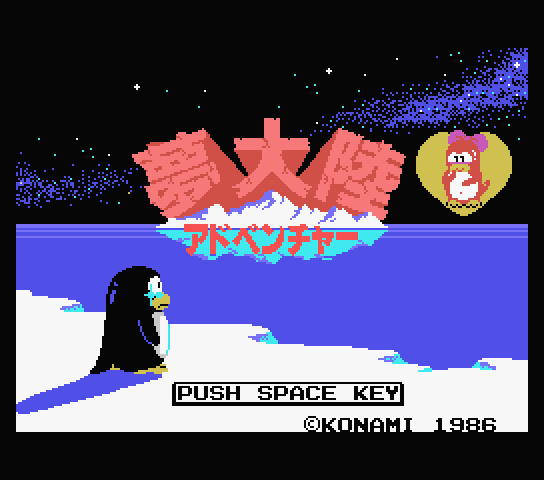
Title screen — the journey to the Dream Continent begins
A sequel to Antartic Adventure, released in 1983 by Konami Industry for the MSX.
The story follows a penguin on a quest to find a golden apple that can save a princess penguin from illness — a simple premise that belies the depth of what follows.
Like its predecessor, the player controls a penguin protagonist from a 3D third-person perspective, repeatedly reaching checkpoints within a time limit while avoiding obstacles, ultimately aiming for the goal.
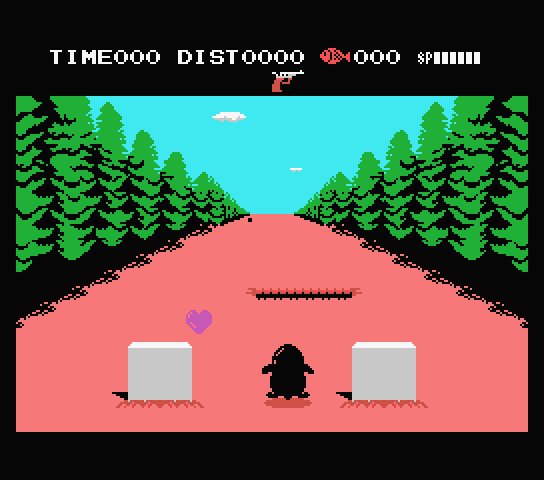
Smooth 3D scrolling — impressive for MSX1 hardware
As its catch phrase suggests, advertisements pushed the RPG label to the forefront to capitalize on the genre’s massive popularity among gamers at the time.
Penguin Adventure represents a dramatic evolution over its predecessor — almost a new game entirely. Despite running on MSX1 hardware, the entire screen scrolls smoothly in 3D with depth. The detailed graphics make the most of the limited dot count and color palette, and the adorable dot-art animations of the penguin protagonist and enemies are full of personality — their expressions and every little movement are sure to warm the player’s heart.
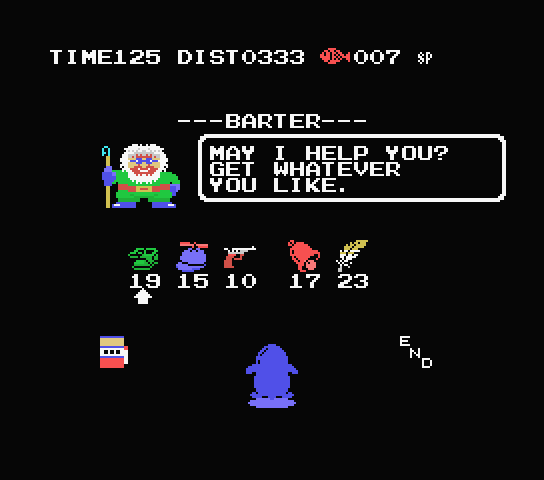
Shopping for items using fish as currency
The game design is equally refined. Stages span not just icy terrain but also water surfaces, mountain ranges, underwater areas, and even outer space, keeping the player’s curiosity engaged throughout. New additions include shops stocked with a variety of items and the use of “fish” as currency, all woven into the experience with excellent balance.
Players are drawn into a deeper layer of strategy as they figure out how to earn money efficiently and which items to prioritize as they push further into the game.
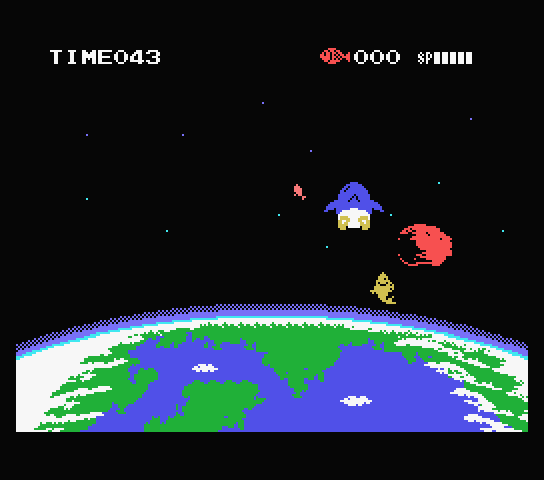
Stages range from icy terrain to outer space
The music deserves special mention. Making full use of three PSG sound channels, the soundtrack boasts an impressive number of tracks, every one of high quality. To this day, many praise the entire soundtrack as a collection of masterpieces perfectly fused with each game scene — a testament to its completeness.
The difficulty is accessible enough for anyone to reach the middle stages, but the latter half ramps up considerably, making for a robust and rewarding action game that offers a real challenge for those aiming to clear it.
What did you think? Content like this — and the preservation work behind it — is made possible by your support.
We also have a Patreon if you prefer.
NPO Game Preservation Society
Credits
Gameplay and Description: Masatoshi TAKAHASHI (GPS)
Emulation Preparation: Takuya FUKUDA (GPS)
Video Editing: Jean MONSET (GPS)
Bitmap Assets: Oskar STROM
Package Scanning: Archive Division (GPS)
Database Information: Keigo MATSUBARA (GPS)
Curation: Joseph REDON (GPS)
Japanese–English Translation: Christopher S. SHIMMIN (PQ)
Special Thanks: All GPS supporting members