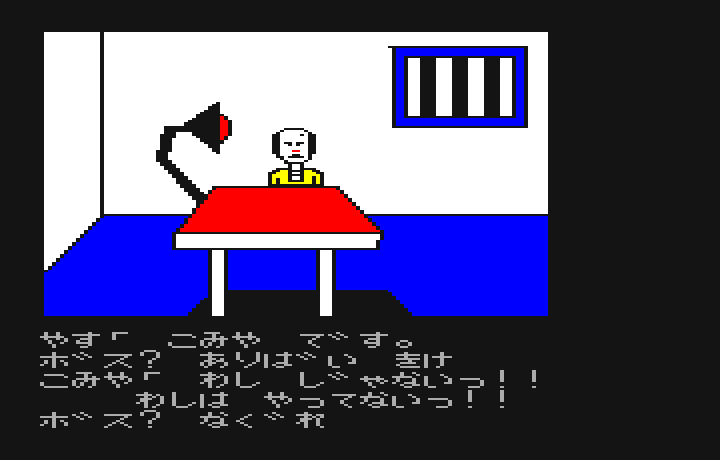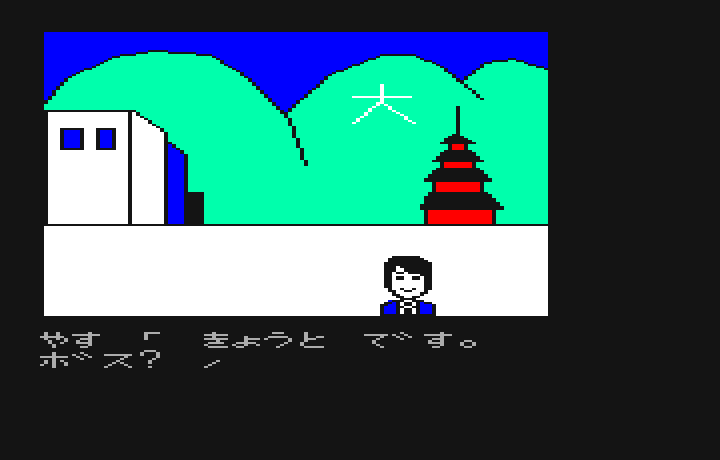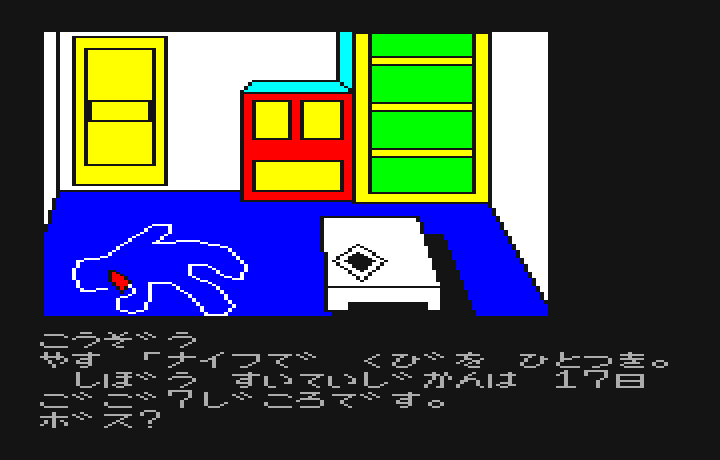

Watch this week’s short video:
Hello everyone!
We’re now on the third episode of the series, and this week we’re stepping into very different territory.
If the first two episodes surprised you, this one might take you somewhere you didn’t expect at all — especially if you’ve never heard of this game before.
This week’s episode is about:
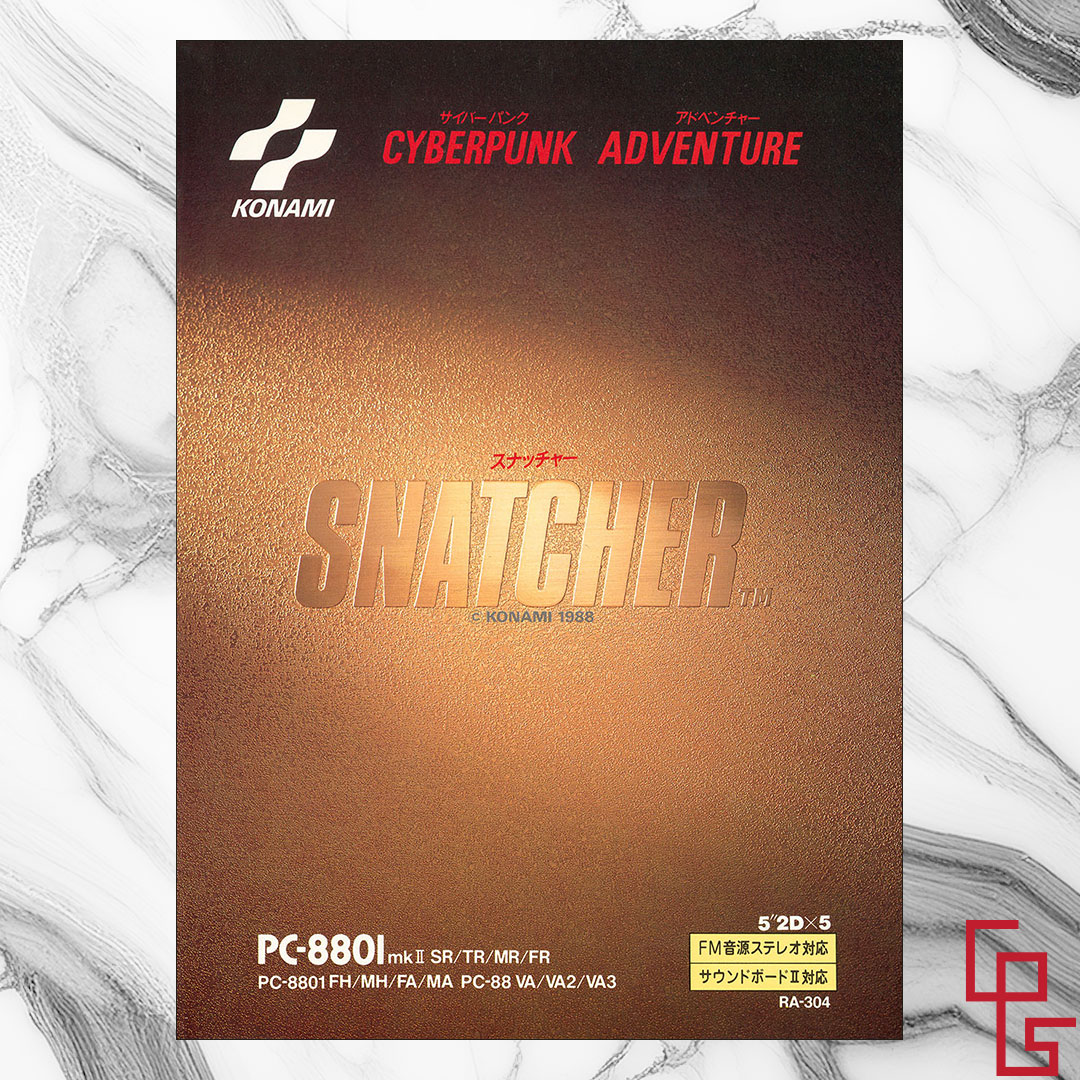
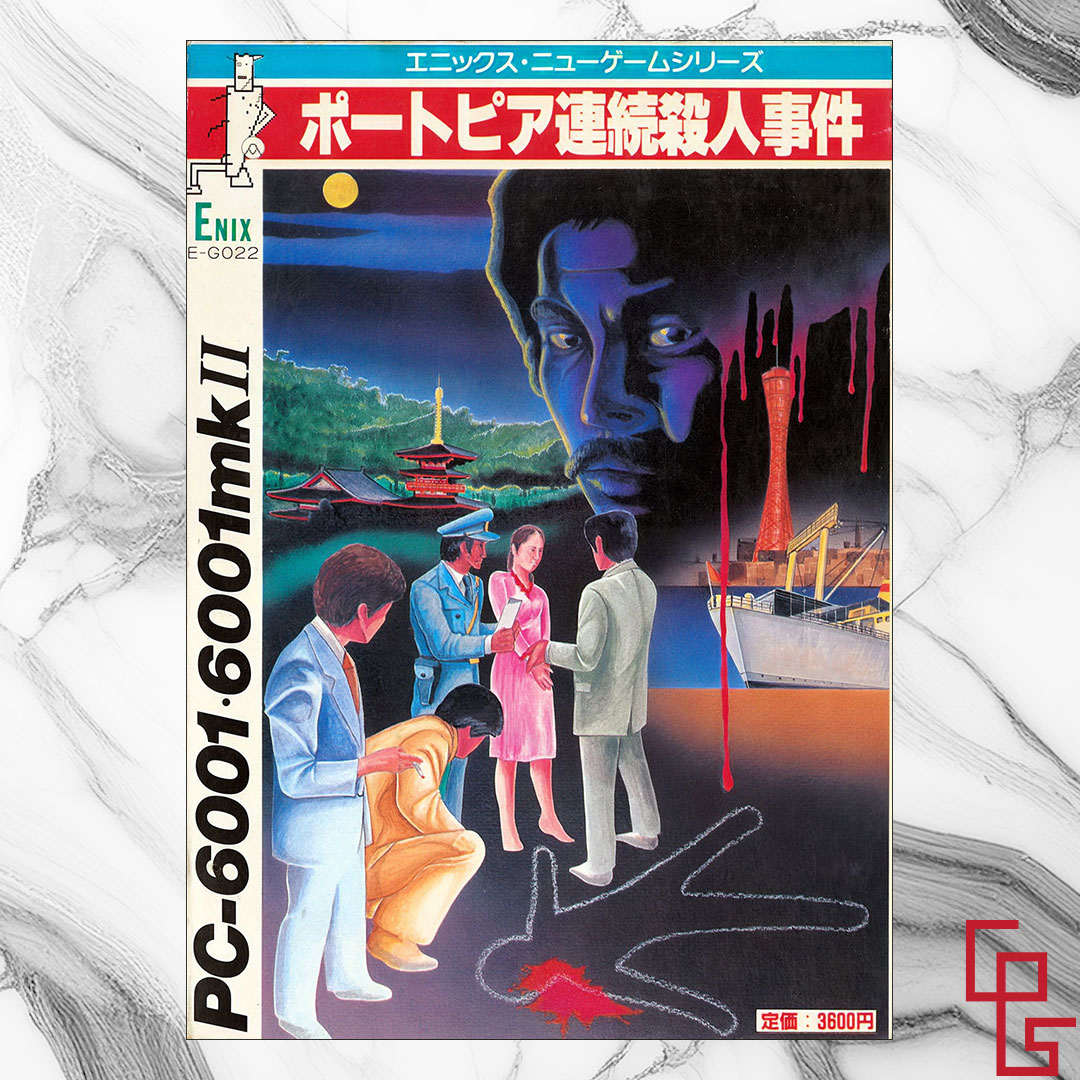
Original package cover (scanned from our archive)
Snatcher
Original Title: スナッチャー【suna^chā】
Published by ©Konami in 1988
For the NEC PC-8801mkIISR on 5.25″2D×5 floppy disks (original version)
Catch phrase: “A nightmare in the year 2042.” “A mysterious shadow creeps over Neo Kōbe City.”

Title screen — Cyberpunk Adventure by Konami
Released in 1988 for the PC-88SR, the adventure game Snatcher was an ambitious project by Hideo KOJIMA, who would go on to achieve worldwide recognition with the Metal Gear series.
It was his first full-fledged story-driven game, and strongly reflected his desire to create “a game that feels like a movie.”

Gillian and Mika — your first allies at JUNKER HQ
The pauses between lines of dialogue, screen transitions reminiscent of camera work, and compositions designed to build tension made the experience feel like playing through a sci-fi film — a level of presentation that was revolutionary for adventure games at the time.
The story is set in a near future where humanoid machines called “Snatchers,” indistinguishable from real people, operate in the shadows. It unfolds as a hard-boiled suspense in which an amnesiac protagonist crosses paths with an enemy whose true identity is unknown.

Snatcher internal schematic — who is truly human?
The underlying theme — the fundamental unease of not knowing who is truly human — resonates with today’s concerns over deepfakes and AI-generated content, giving the work new meaning even now.
At the time, adventure games were leading the way in narrative and visual evolution on the Japanese PC market, but Snatcher stood out even among them for its exceptional level of polish.

The neon-lit streets of Neo Kōbe City
By pushing the boundaries of storytelling and presentation beyond the constraints of the hardware, Snatcher earned its place as a landmark of Japanese adventure games.
The atmosphere, evoking the influence of sci-fi films such as Blade Runner, further adds to the work’s lasting appeal.
What did you think? Content like this — and the preservation work behind it — is made possible by your support.
We also have a Patreon if you prefer.
NPO Game Preservation Society
Credits
Gameplay and Description: Masatoshi TAKAHASHI (GPS)
Emulation Preparation: Takuya FUKUDA (GPS)
Video Editing: Jean MONSET (GPS)
Bitmap Assets: Oskar STROM
Package Scanning: Archive Division (GPS)
Database Information: Keigo MATSUBARA (GPS)
Curation: Joseph REDON (GPS)
Japanese–English Translation: Christopher S. SHIMMIN (PQ)
Special Thanks: John SZCZEPANIAK and all GPS supporting members